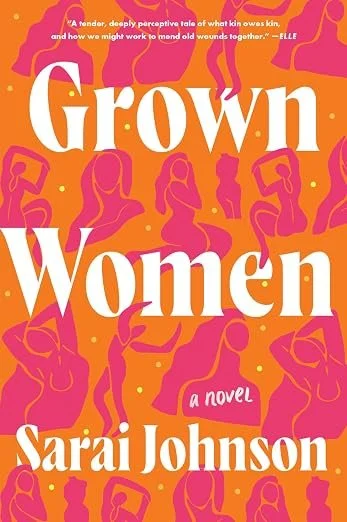
Book Title: Grown Women
Author: Sarai Johnson
Genre: Contemporary Women's Fiction
Star Rating: ⭐⭐⭐⭐½ (4.5/5)
Just between us, here's what I really thought.
I went into Grown Women thinking I was about to read one kind of story and walked away with something COMPLETELY different. And I mean that in the best way possible. This book had me thinking about so much, especially the relationships between mothers and daughters, the things we inherit from the women who raised us, and how generational trauma can affect an entire family without anyone fully realizing the damage being done.
There was SO MUCH to unpack in this book. First, I absolutely loved how Sarai Johnson told this story through different perspectives. I think that was one of the strongest parts of the book because it allowed me to understand these women individually instead of looking at their experiences from only one side. And that's important because family relationships are complicated. Two people can experience the same situation and walk away with completely different feelings about what happened. What one person considers love or discipline, another person may remember as rejection, hurt, or emotional neglect. And that's exactly what made this story so powerful to me.
I was happy that we got to understand Evelyn's perspective, her background, and her upbringing. Because listen… I had some FEELINGS about that woman! But learning more about where she came from and the experiences that shaped her helped me understand why she was the way she was. It didn't necessarily make me agree with her behavior, but it gave me a different perspective.
And I think that's something we don't talk about enough when discussing generational trauma. Sometimes the people who hurt us are carrying pain that started long before we were even born. They may have grown up in environments where affection wasn't expressed, emotions weren't discussed, and survival mattered more than emotional well-being. So they end up raising their children with the same behaviors and beliefs they learned growing up, without recognizing how harmful those patterns can be.
But understanding someone's trauma doesn't mean we have to excuse the hurt they caused. And that was one of my biggest takeaways from Evelyn's story.
I felt for Corinna. I really did, but CHARLOTTE?! My heart went out to that woman. I felt so much more for her because I could see how the way Evelyn treated her created this massive ripple effect that continued through the generations. It's heartbreaking when you really think about how one person's unresolved pain can influence how another person sees themselves, how they love, how they parent, and how they navigate relationships. Sometimes we don't even realize we're repeating the very things that hurt us until we see those same behaviors showing up in our own lives.
And that's what made Charlotte's experience so emotional for me. I found myself thinking about how different things could’ve been if certain conversations had happened, if someone had shown more compassion, or if the women in this family had been given the opportunity to heal before passing their pain on to the next generation.
I also resonated SO MUCH with Charlotte and Camille. Their experiences really made me reflect on the expectations placed on women, especially when it comes to family, motherhood, forgiveness, and the responsibility of keeping everyone together. There's this expectation that women are supposed to understand everything, forgive everything, carry everybody's emotional burdens, and somehow still find a way to be okay. And when you're a mother or daughter, those expectations can become even heavier. But who takes care of the women who are always expected to take care of everyone else? Who gives them permission to be angry, disappointed, exhausted, or simply tired of carrying things they never asked for? That's something I kept thinking about while reading this book.
And then there’s CAMILLE!!! I genuinely appreciated the path she decided to take for herself. I think there's something incredibly powerful about recognizing the patterns within your family and deciding that you want something different for your own life. That doesn't mean you don't love your family or appreciate the sacrifices that were made before you. Sometimes it simply means acknowledging that certain things cannot continue. I loved that Camille's journey made me think about what it means to make decisions for yourself rather than allowing family history, expectations, or unresolved trauma to determine your future.
Because breaking generational cycles sounds beautiful when we talk about it, but I imagine it's one of the hardest things a person can actually do. It requires you to confront uncomfortable truths, question things you've been taught your entire life, and sometimes make decisions that the people closest to you may never understand. And that takes courage.
What I appreciated most about Grown Women was that Sarai Johnson didn't give us a story where everything was simple or where every character was easy to love. These women were complicated. They had their own experiences, pain, choices, and perspectives. There were moments when I felt sympathy for them and other moments when I was frustrated by their behavior. But I think that's what made them feel so human.
The different points of view also reminded me that there can be more than one truth within a family. A mother may genuinely believe she did the best she could with what she had, while her daughter may still carry deep emotional wounds from that upbringing. Both experiences can exist at the same time. And sometimes healing begins when we stop trying to decide whose pain matters more and start acknowledging that everyone has been affected differently.
I also kept thinking about how much of our family history we don't know. How many stories have gone untold? How many women before us experienced things they never had the opportunity to discuss? And how many of their fears, insecurities, and survival habits have been passed down without anyone questioning where they came from? And as a woman and mother, those questions stayed with me.
This book really made me reflect on the importance of being intentional about what I pass down to my own children. Not just financially or mentally, but emotionally. The way we communicate, the way we show affection, the way we handle conflict, and the way we respond to our children's feelings can have an impact that lasts far beyond their childhood. And sometimes the greatest thing we can give the next generation is the opportunity to experience something healthier than what we knew.
Now, was this an easy read emotionally? ABSOLUTELY NOT! There were moments when I had to put the book down just to process everything. And it wasn’t because I wasn't enjoying it, but because some of the situations were so frustrating and heartbreaking. I wanted better for these women. I wanted them to communicate, to understand each other, and to recognize the damage that had been done. But I also appreciated that the story made me uncomfortable at times. It challenged me to look beyond individual decisions and consider the experiences that shaped those decisions in the first place.
I genuinely loved this book. I loved the storytelling, the multiple perspectives, the family dynamics, and how the author explored the generational trauma, which made this such an amazing reading experience. Sarai Johnson gave us a story that goes beyond the relationships between mothers and daughters. It's about the emotional inheritance we carry, the pain we don't always recognize, and the choices we make when we finally understand where that pain began. I don't know if I can fully explain everything this book made me feel because there was just SO MUCH to unpack. I know I've said that several times, but seriously! This is one of those books that deserves a conversation after you finish reading it.
I highly recommend Grown Women, especially if you enjoy stories about complicated family relationships, generational trauma, motherhood, identity, and personal growth. And I would LOVE to sit down with other women who have read this book because I have QUESTIONS, THOUGHTS, and so much I want to discuss!
Just between us, sometimes growing into the woman you want to become means confronting the pain of the women who came before you. ❤️